TRANSMISSION // 2610.40643v1 AI ADAPTED
Researchers examine multi-camera strategies for luggage re-identification
An arXiv preprint studies how an end-to-end system might detect and match luggage across video streams, but its abstract does not report results.
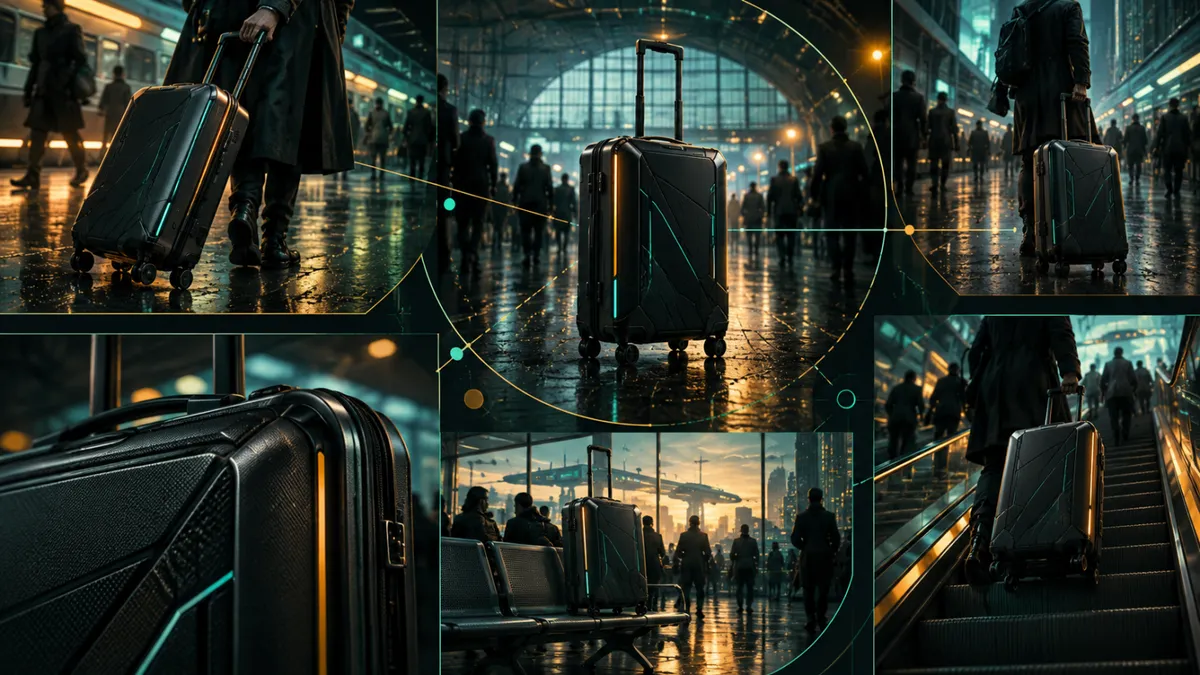
Matching the same suitcase across separate camera views can be difficult in crowded environments. Quentin Dhôte and Romaric Audigier study strategies for using multiple views and shots to tackle that problem.
What the study found
In an arXiv preprint, Dhôte and Audigier describe a study of an end-to-end pipeline intended to detect luggage and re-identify it across multiple video streams. They evaluate variants on a benchmark dataset acquired in real-world environments, considering how to select and merge different views and shots of the same item and how training on datasets from different environments relates to overall re-identification performance.
The abstract does not state which variants performed best or report numerical results. It therefore does not establish whether the tested strategies improved performance.
Why it matters
Luggage re-identification aims to associate observations of the same item across camera views that do not overlap. The authors identify potential uses including lost-luggage recovery and recognizing suspicious or abandoned luggage. They note that occlusion, cluttered backgrounds and crowds can degrade performance, while existing approaches have mainly matched cropped images by appearance under relatively clean conditions.
Examining multiple shots and views could help researchers assess whether information from different observations is useful under those conditions. That is the motivation for the study, not a demonstrated outcome in the abstract.
Limits and unknowns
The abstract does not specify the benchmark’s size, locations or composition, the pipeline’s technical details, the tested variants, or the evaluation metrics. It also gives no results on errors, privacy implications or performance in particular settings. The available description is insufficient to judge practical reliability or establish that the system has been deployed.
- luggage re-identification
- computer vision
- multi-camera video
- object detection
- preprint