A plant genetic switch separates DNA delivery from integration
A preprint describes a seed-visible system for studying when transferred DNA reaches plant cells without integrating.
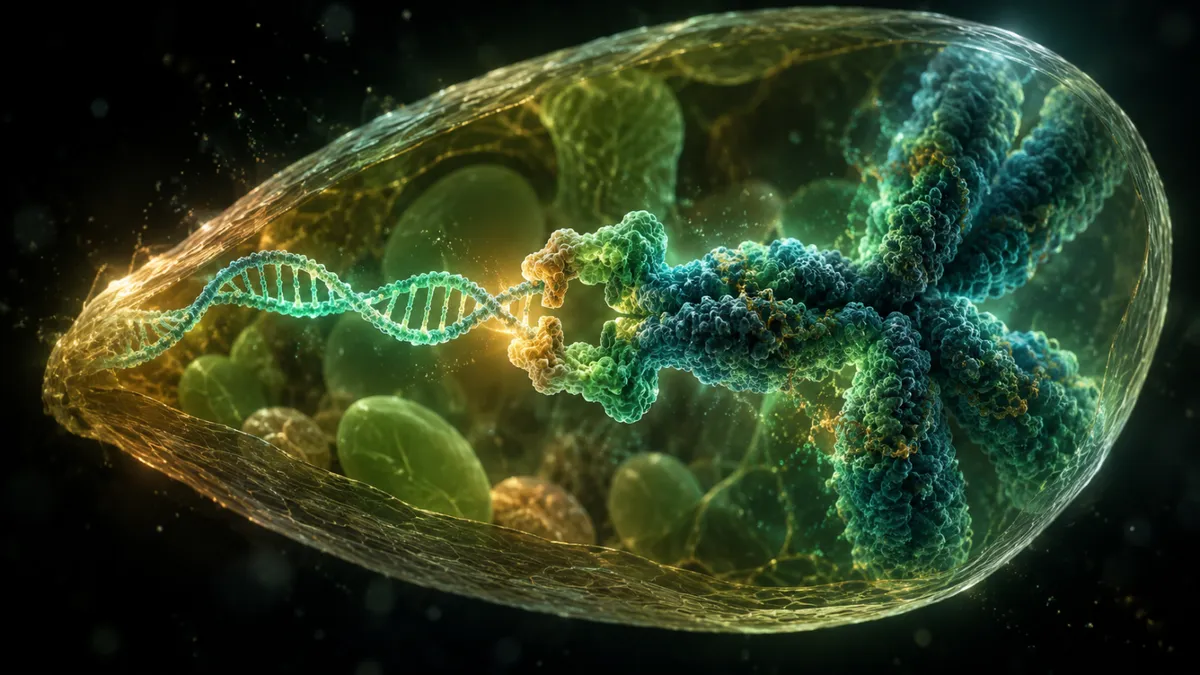
AI-generated conceptual illustration; not documentary evidence.
Delivering DNA into a plant cell and incorporating it into the genome are related, but they are not the same event. A new tool aims to make that distinction visible.
What the study found
Zhong, Chu and Brophy describe T-SWITCH, a synthetic genetic switch integrated into the plant genome. It reports T-DNA delivery through a heritable seed phenotype, allowing the researchers to measure delivery and integration separately in Agrobacterium-mediated transformation.
In Arabidopsis floral-dip transformation events, the authors report that approximately 13–26% involved T-DNA delivery without integration. They also report recovering plants with mutations on both gene copies induced by CRISPR, without detectable integration of the CRISPR-Cas components.
Why it matters
Separating delivery from integration gives researchers a way to investigate which stage changes when transformation conditions vary. The authors propose that their approach could help recover edited plants without detectable integration of the editing components using standard Agrobacterium protocols.
Limits and unknowns
This bioRxiv paper is a preprint and this briefing is based on its abstract alone. The reported range is specific to the studied Arabidopsis transformation events; the abstract does not establish the same rate in other species or settings. ‘Without detectable integration’ does not prove that integration is impossible or absent under every detection method.