TRANSMISSION // 2026.10.28.762700v1 AI ADAPTED
Urban biowaste compost reshapes bacteria around tomato roots
A bioRxiv preprint reports a more diverse bacterial community and greater predicted functional potential in the rhizosphere of compost-treated tomato plants than in those given chemical fertilizer.
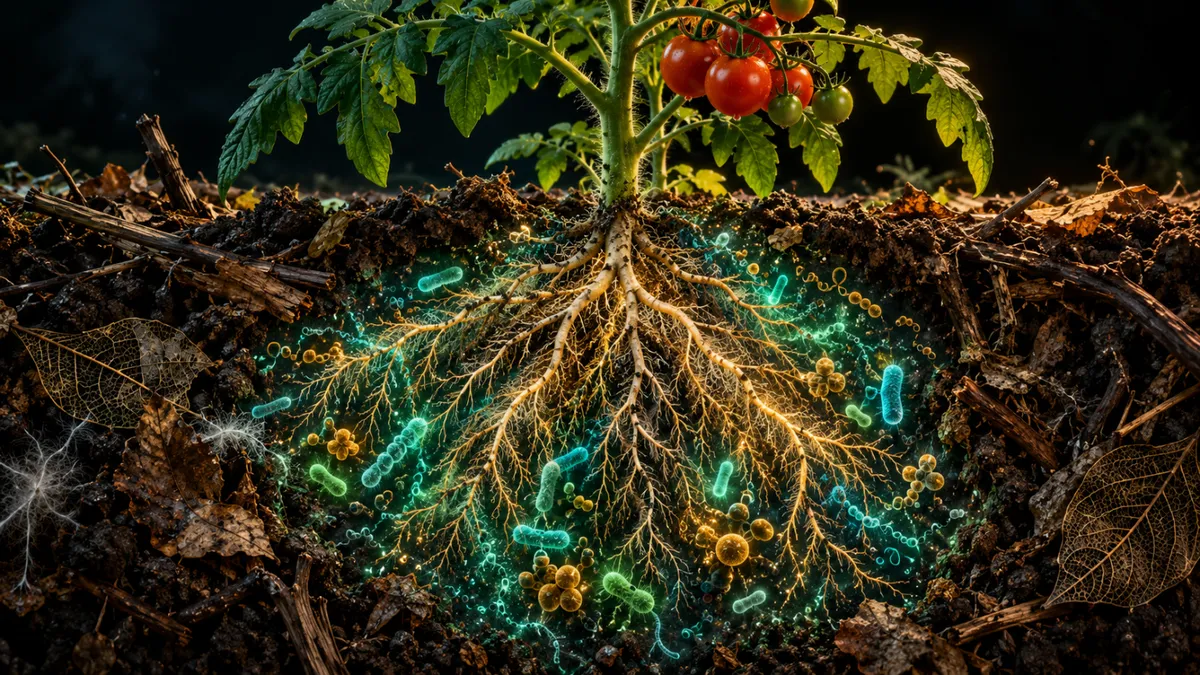
Compost made from urban food and plant waste may do more than supply nutrients: its bacteria can also contribute to communities associated with tomato plants, according to a study by Cipriani and colleagues.
What the study found
In a bioRxiv preprint, the authors compared tomato plants fertilized with industrial urban-biowaste compost with plants given conventional chemical fertilizer. Their community and functional analyses examined bacteria in soil, the rhizosphere—the soil environment surrounding roots—and roots themselves.
An analysis tracking bacterial taxa indicated a significant contribution from compost-derived taxa to all three environments. Bacterial communities clustered differently by fertilizer type. In the rhizosphere, compost was associated with a more diverse community enriched in Firmicutes species.
The authors also reported increased microbial pathways in the compost-treated rhizosphere, including those involving enzymes associated with cellulose and xylan breakdown, nitrogenase, phytase and 1-ACC deaminase. They interpret these results as greater predicted functional and plant growth-promoting potential in the rhizosphere.
Why it matters
The findings suggest that compost can be a source of bacteria as well as nutrients, and that fertilizer choice is associated with differences in the microbial community around tomato roots. The predicted functions point to possibilities for microbial activity relevant to plants and soil, but do not by themselves establish improved crop productivity.
Limits and unknowns
This account is based on the abstract, which does not specify sample sizes, growing conditions, analytical methods, effect sizes or measures of plant growth and yield. The reported functional potential is predicted; the abstract does not establish that the enzymes were active or caused benefits. Findings about increased functional potential concern the rhizosphere, not root tissue.
- tomato
- urban biowaste
- compost
- rhizosphere
- bacterial diversity
- biofertilizer
- preprint